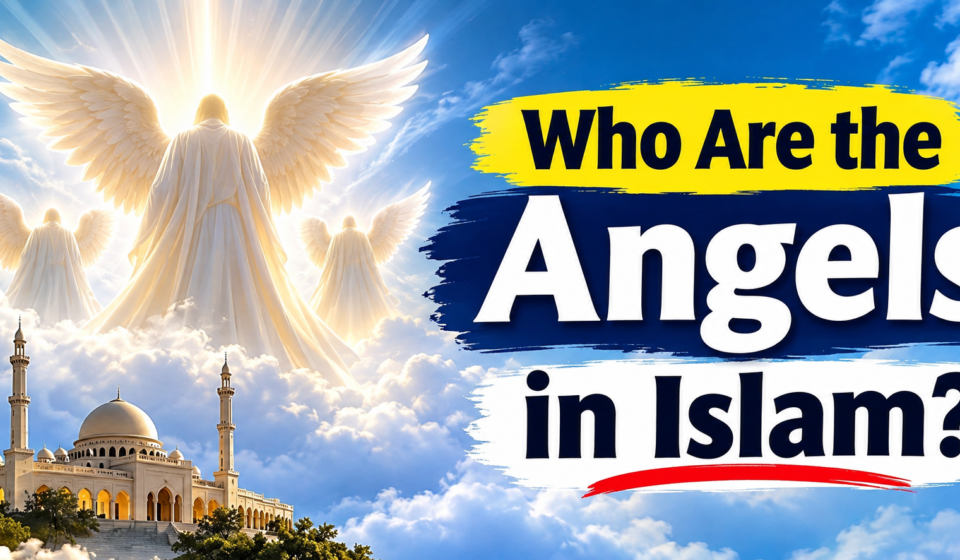

Belief in the unseen is at the heart of faith, and few unseen realities are mentioned as often as the angels. The Quran refers to them repeatedly, describing their worship, their duties and their closeness to Allah. This guide explains who the angels in Islam are, what they do, and how believing in them shapes a Muslim’s life, based on the Quran and authentic Sunnah.
What Are Angels in Islam?
The Prophet ﷺ said: “The angels were created from light, the jinn from smokeless fire, and Adam from that which has been described to you” (Sahih Muslim). Angels are unseen to us unless Allah allows it, and they are not human, divine or semi-divine. They are creations of Allah, fully subject to Him.
Belief in Angels Is a Pillar of Iman
In the famous hadith of Jibril, the Prophet ﷺ listed the pillars of faith: belief in Allah, His angels, His books, His messengers, the Last Day and divine decree (Sahih Muslim). The Quran says: “The Messenger believes in what was revealed to him from his Lord, and so do the believers. All of them believe in Allah, His angels, His books and His messengers” (Quran 2:285). Rejecting the angels means rejecting a core part of faith.
Perfectly Obedient, With No Gender
The Quran describes angels as “those who do not disobey Allah in what He commands them, and do as they are commanded” (Quran 66:6). They glorify Him night and day without tiring (Quran 21:19-20). The Quran also rejects the idea that angels are female (Quran 53:27), so Muslims do not assign gender to them.
Names and Roles of the Angels in Islam
Jibril is the most honored angel, entrusted with delivering revelation to the prophets. The Quran calls him “the Trustworthy Spirit” who brought it down upon the heart of Prophet Muhammad ﷺ (Quran 26:193-194). The Prophet ﷺ saw him in his true form, with six hundred wings, filling the horizon (Sahih al-Bukhari and Sahih Muslim).
Mikail (Michael)
Mikail is named in the Quran alongside Jibril (Quran 2:98). Scholars commonly mention that he is entrusted with matters such as rain and provision, by Allah’s command.
Israfil: The Angel of the Trumpet
The Quran describes the Trumpet being blown on the Last Day, after which all will fall unconscious except those Allah wills (Quran 39:68). Authentic Islamic tradition identifies the angel entrusted with this task as Israfil.
Malak al-Mawt: The Angel of Death
Allah says: “Say, the angel of death who has been entrusted with you will take your souls, then to your Lord you will be returned” (Quran 32:11). He works with assisting angels who receive the soul at the time of death (Quran 6:61).
Munkar and Nakir: The Angels of the Grave
Authentic narrations describe two angels who question the deceased about their Lord, their religion and their prophet. Hadith narrations name them Munkar and Nakir. Allah keeps the believers firm with the word that stands firm (Quran 14:27).
The Noble Recorders (Kiraman Katibin)
The Quran says: “Indeed, over you are keepers, noble and recording; they know whatever you do” (Quran 82:10-12). Two angels sit on the right and left of every person recording their deeds (Quran 50:17-18). Nothing is lost or forgotten.
Malik and the Keepers of Paradise
Malik is the keeper of Hellfire, mentioned in the Quran (Quran 43:77). The keepers of Paradise greet the believers with peace as they enter (Quran 39:73).
Other Duties of the Angels
The Quran mentions angels who protect people by Allah’s command (Quran 13:11), and others who ask forgiveness for the believers (Quran 40:7). The Prophet ﷺ also taught that angels attend gatherings of remembrance of Allah (Sahih al-Bukhari and Sahih Muslim), and that 70,000 angels visit the Bayt al-Ma’mur in the heavens daily and never return to it again (Sahih al-Bukhari and Sahih Muslim). Their worship never ceases.
How Belief in Angels Shapes a Muslim’s Life
Knowing that angels record every deed encourages sincerity and good character, even in private. Knowing they are with us in remembrance and prayer brings comfort. And knowing that revelation came through Jibril strengthens trust in the Quran as Allah’s preserved word.
Frequently Asked Questions About Angels in Islam
Do Muslims worship angels?
No. Worship is for Allah alone. Angels are honored servants who submit to Him, and the Quran forbids taking them as lords (Quran 3:80).
Was Iblis an angel?
No. The Quran states clearly that Iblis “was of the jinn” and disobeyed his Lord’s command (Quran 18:50). Angels cannot disobey Allah.
How many angels are there?
Only Allah knows their number. The Quran says: “And none knows the soldiers of your Lord except Him” (Quran 74:31).
Do angels have wings?
Yes. The Quran describes angels as having wings, two, three or four, and more as Allah wills (Quran 35:1).
Do angels eat or sleep?
The Quran says they glorify Allah night and day without slackening (Quran 21:20). Islamic scholars understand from this that they do not tire as humans do.
Conclusion
The angels in Islam are among Allah’s most honored creations, each fulfilling a role from delivering revelation to recording deeds. Learning about them through the Quran and authentic Sunnah strengthens faith in the unseen and inspires a life of awareness, gratitude and obedience to Allah. May Allah increase us in knowledge and faith.