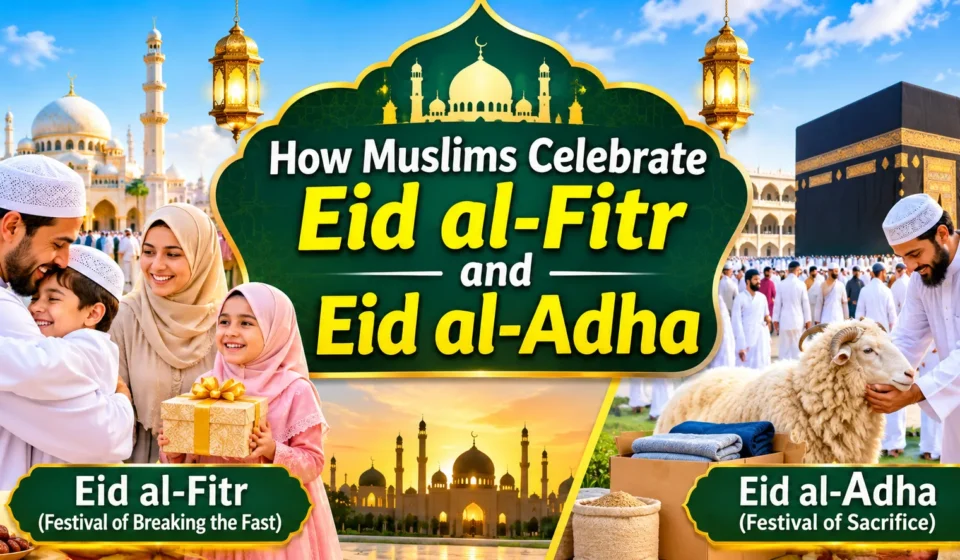

In Islam, there are two annual festivals, Eid al-Fitr and Eid al-Adha. Anas ibn Malik (may Allah be pleased with him) reported that when the Prophet Muhammad ﷺ arrived in Madinah, the people had two days of play and celebration. He told them that Allah had replaced them with two better days: the day of Fitr and the day of Adha (Sunan Abi Dawud and Sunan an-Nasa’i).
Eid al-Fitr | The Festival of Breaking the Fast
Eid al-Fitr falls on the first day of Shawwal, right after Ramadan. Allah instructs believers to complete the month of fasting and glorify Him for guiding them, so that they may be grateful (Surah Al-Baqarah 2:185).
The Meaning Behind Eid al-Fitr
The day celebrates the completion of a month of fasting, night prayer and Quran recitation. Muslims thank Allah for giving them the strength to worship and ask Him to accept their deeds. It is a day of gratitude, not excess.
Zakat al-Fitr Before the Eid Prayer
A key duty of this Eid is Zakat al-Fitr, a charity given on behalf of every Muslim in the household. Ibn Umar (may Allah be pleased with him) reported that the Prophet ﷺ made it obligatory, and commanded that it be paid before people go out to the Eid prayer (Sahih al-Bukhari and Sahih Muslim). Its purpose, as reported by Ibn Abbas, is to purify the fasting person from idle talk and to feed the poor (Sunan Abi Dawud).
Sunnah Practices on the Morning of Eid al-Fitr
- Perform ghusl (a full bath) and wear your best clean clothes.
- Use perfume (for men) and dress modestly.
- Eat an odd number of dates before heading to the prayer, as the Prophet ﷺ did (Sahih al-Bukhari).
- Recite the takbir on the way to the prayer ground.
- Take a different route back from the prayer, which is also reported in the Sunnah (Sahih al-Bukhari).
The Eid Prayer: A Shared Act of Worship
The Eid prayer is a two-rakah congregational prayer performed in the morning, after the sun has risen. It has no adhan or iqamah, and it is followed by a sermon (khutbah). The Prophet ﷺ even encouraged women, including those not praying, to attend and share in the blessings and supplications of the Muslims (Sahih al-Bukhari and Sahih Muslim).
The Takbir of Eid
The takbir expresses the greatness of Allah: Allahu Akbar, Allahu Akbar, La ilaha illa Allah, Allahu Akbar, Allahu Akbar, wa lillahil hamd. Allah mentions glorifying Him for His guidance in the verse about completing Ramadan, which is why Muslims recite it from the night before Eid al-Fitr until the prayer.
Holding the Prayer in Congregation
It is established in the Sunnah that Eid prayer is held in an open space or large gathering whenever possible. This strengthens unity and reminds Muslims that the community is one body, whatever its background.
Eid al-Adha | The Festival of Sacrifice
Eid al-Adha takes place on the 10th of Dhul Hijjah, during the days of Hajj. It commemorates the obedience of Prophet Ibrahim (peace be upon him) when he was willing to sacrifice his son, and Allah replaced the sacrifice with a ram (Surah As-Saffat 37:102-107).
The Lesson of Submission
The heart of this Eid is submission to Allah and sincerity. Allah says that neither the meat nor the blood of the sacrifices reaches Him, but it is piety (taqwa) from you that reaches Him (Surah Al-Hajj 22:37). Qurbani is therefore about intention and obedience, not ritual alone.
Qurbani and Its Distribution
Qurbani (also called Udhiyah) is the sacrifice of an eligible animal such as a sheep, goat, cow or camel, performed after the Eid prayer. The Prophet ﷺ taught that whoever sacrifices before the prayer has only given meat to his family, and it does not count as the sacrifice (Sahih al-Bukhari and Sahih Muslim).
Many scholars describe the common practice of dividing the meat into three parts: one for the family, one for relatives and friends, and one for the poor. This reflects the spirit of generosity found throughout Islam.
Takbir During the Days of Tashriq
Muslims recite takbir from the start of Dhul Hijjah, and especially after the obligatory prayers during the days of Tashriq (11th to 13th). Allah commands remembrance of Him during these appointed days (Surah Al-Baqarah 2:203). These are also days of eating and drinking and remembering Allah, as the Prophet ﷺ said (Sahih Muslim).
What Eid al-Fitr and Eid al-Adha Share
While the rituals differ, both festivals follow the same pattern: worship first, then celebration.
Prayer, Charity and Community
Both Eids begin with congregational prayer, stress giving to those in need, and bring family and neighbors together. Visiting relatives, exchanging greetings such as “Taqabbal Allahu minna wa minkum” (may Allah accept from us and from you), and sharing meals are cherished traditions among the companions.
Joy Within the Limits of Islam
The Prophet ﷺ allowed lawful enjoyment on Eid. In the narration of Aisha (may Allah be pleased with her), he permitted girls to sing in her home on the day of Eid, and he reminded Abu Bakr that every people have a festival and this is ours (Sahih al-Bukhari and Sahih Muslim). Celebration is encouraged as long as it avoids what Allah has forbidden.
Practical Tips to Make Your Eid Meaningful
To get the most from these blessed days, keep both the spiritual and social sides in mind.
Before Eid
- Pay Zakat al-Fitr early enough to reach those in need before the prayer.
- Arrange your Qurbani in advance for Eid al-Adha, whether personally or through a trustworthy organization.
- Plan your clothing, route and prayer location to arrive early.
On the Day of Eid
- Follow the Sunnah etiquette of cleanliness, good clothing and takbir.
- Greet others warmly and forgive past grievances.
- Remember neighbors, new Muslims, orphans and those who may be alone.
After Eid
After Eid al-Fitr, many Muslims fast six days of Shawwal, which the Prophet ﷺ said brings the reward of fasting the whole year when combined with Ramadan (Sahih Muslim). After Eid al-Adha, continue remembrance of Allah and the good habits built during the days of Hajj season.
Final Thoughts
Eid is more than a date on the calendar. In Islam, it is a gift from Allah that rewards worship with joy, brings communities together, and teaches gratitude, charity and sacrifice. Whether you are breaking your fast on Eid al-Fitr or offering Qurbani on Eid al-Adha, remember that the goal is taqwa and sincere devotion.
May Allah accept our fasting, our prayers and our sacrifices, and make every Eid a source of mercy and unity. Eid Mubarak!